
Obtaining Permanent Residency (PR) in Singapore is a prestigious goal for many foreign nationals. It offers numerous benefits, such as access to public healthcare, education, and the ability to live and work without restrictions. However, the journey to securing PR status can be complex and sometimes disheartening. Many applicants are left frustrated after their applications are rejected, often without fully understanding the reasons behind the decision.
Adding to the confusion, several myths about the PR application process can mislead potential applicants. These misconceptions can cause unnecessary worry, which may detract from the focus needed to build a strong application. In this article, we will debunk five of the most common myths regarding PR rejections and provide insights on how to navigate the process successfully.
Myth 1: Only Highly Paid Professionals Are Eligible for PR
One of the most widespread misconceptions is that only individuals with high-paying jobs or those in specialised industries can qualify for PR status. While salary and professional skill level are indeed factors that the Immigration and Checkpoints Authority (ICA) considers, they are not the sole determinants.
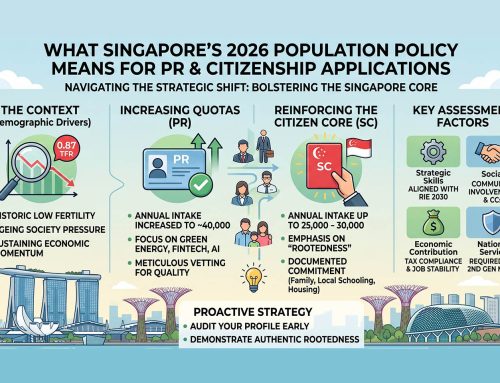
Reality: The ICA evaluates PR applications based on a comprehensive set of criteria, which includes work experience, education level, economic contributions, and alignment with Singapore’s national interests. While high-paying professionals may have an advantage, Singapore values a diverse range of contributors to its economy and society. Applicants from various industries, including those who own businesses or work in less traditionally high-paying sectors, may still be eligible if they can demonstrate a positive impact on the country.
For example, if you are an entrepreneur who has invested in the local economy or created job opportunities, your contributions could be highly valued, even if your salary is not exceptionally high.
Myth 2: PR Rejections Are Permanent
Many applicants fear that a rejection is a final decision and that they will never be able to reapply. This belief is particularly troubling for those who have invested a significant amount of time and effort into their applications.
Reality: A rejection does not mark the end of your chances to obtain PR in Singapore. While the decision may be disappointing, it is important to understand that rejections are not permanent. You can reapply after addressing the specific reasons for the initial denial.
What you can do: If your application was rejected due to a lack of supporting documentation, insufficient economic contributions, or other factors, take the time to improve these areas. This might include upgrading your skills, enhancing your professional profile, or contributing more actively to Singapore’s community. With these changes in place, you can increase your chances of success in a future application.
Myth 3: Having Family Members in Singapore Guarantees PR Approval
Another common myth is that having family members who are already PR holders or Singaporean citizens will automatically improve your chances of securing PR status. While family ties can be a factor in the decision, they do not guarantee approval.
Reality: The ICA evaluates each application based on a variety of factors, including your personal contributions to Singapore, your employment history, and how well you have integrated into the local community. While having family connections in Singapore may help, they are just one piece of the puzzle. The ICA takes a holistic view of your application, considering how you contribute to the country socially, economically, and culturally.
Takeaway: Applicants should focus on showcasing their individual merits and contributions to Singapore, rather than relying solely on family connections.
Myth 4: PR Rejections Are Based on Personal Bias or Discrimination
A common concern among PR applicants is the fear that their application might be rejected due to personal bias or discrimination. Some worry that subjective factors might influence the decision-making process, especially if they come from a minority group or have unique circumstances.
Reality: The PR application process is objective, transparent, and based on clear criteria set out by the ICA. Factors such as your professional achievements, community involvement, and overall contributions to Singapore are evaluated based on merit, not personal opinion or bias. The ICA’s decisions are made with fairness and consistency, and any notion of bias is unfounded.
What to do: Rather than worrying about discrimination, focus on presenting a well-documented, robust application that highlights your qualifications and contributions to Singapore.
Myth 5: A High Salary Alone Ensures PR Approval
Another misconception is that having a high salary guarantees PR approval. While financial stability and the ability to contribute to the economy are important, they are only part of the picture. Many applicants believe that if they earn a high salary, they automatically meet the criteria for PR approval.
Reality: The ICA assesses a PR application based on a broad range of factors, not just salary. Although a higher income may improve your chances, it is not a guarantee. Your overall profile—including your professional background, how you contribute to Singapore’s workforce, your community involvement, and how well you integrate into Singapore’s society—will also be scrutinised.
Key takeaway: A high salary is beneficial, but it must be accompanied by a well-rounded application that demonstrates your long-term value to Singapore.
Conclusion
Navigating the Singapore PR application process can be challenging, but debunking common myths can help alleviate unnecessary stress and confusion. Understanding the full scope of what the Immigration and Checkpoints Authority (ICA) considers when reviewing applications is crucial for applicants seeking PR status.
Instead of focusing on misconceptions, applicants should prioritise building a strong, well-rounded application that highlights their professional achievements, contributions to the local community, and overall alignment with Singapore’s national interests.
If you’re seeking guidance on your PR application or need assistance throughout the process, Majestic Immigration Singapore is here to help. Our team of immigration experts is dedicated to helping foreign nationals achieve their PR goals and navigate the complex application process. We understand the nuances of the process and can provide personalised advice to ensure your application stands the best chance of success.
For more information or to schedule a consultation, please visit our website or contact us directly at contact-us.
FAQs:
- What are the main factors considered in a Singapore PR application?
The Immigration and Checkpoints Authority (ICA) evaluates several factors, including professional qualifications, economic contributions, length of stay in Singapore, community involvement, and integration efforts. - How long does it take to process a Singapore PR application?
The processing time for a Singapore PR application typically takes between 4 to 6 months, although it can vary depending on the complexity of the case. - Can I reapply for Singapore PR if my application was rejected?
Yes, you can reapply for Singapore PR after addressing the reasons for your initial rejection. It is important to improve the areas that led to the rejection, such as your employment situation or documentation. - Does having a high salary guarantee PR approval in Singapore?
While a high salary can improve your chances, it is not the sole determining factor. The ICA considers various aspects of your application, including your overall contributions to Singapore and community involvement. - How can Majestic Immigration Singapore assist me in my PR application process?
Majestic Immigration Singapore offers expert advice and personalised support throughout the PR application process. Our team ensures that your application is complete, accurate, and tailored to meet the ICA’s criteria.
For more information, explore our Singapore PR Application page.